

The Motoring Journey w/ Andrew Maness
Andrew Maness talks analog cars, publishing an independent magazine, and the best drives.


I first got properly connected with Andrew Maness here on Substack. I had been a subscriber to his The Motoring Journal from the beginning. A few weeks ago, Andrew and I finally sat down for a proper conversation over an evening drink: him with a split-base Negroni and me with a Nikka From The Barrel Japanese whisky. With drinks in hand, we had a wide, highly civilized ramble through cars, travel, magazines, style, taste, and all the other things that make life more interesting.
Andrew is one of those rare people who is not merely enthusiastic about things, but genuinely expert in them. He has written extensively and seriously about the subjects he loves, but what makes him especially interesting is how far his curiosity runs. Cars may be the natural starting point, but the road quickly bends toward modern culture, serious craft, great places, great memories, and why certain things still resonate with us, even when today’s world seems determined to sand off every edge and call it progress.
I hope you enjoy reading this as much as I enjoyed putting it together. ( JP )


Andrew Maness does not consider cars trophies. He seems to be interested in what they make possible: the road out of town, the hotel you would not otherwise not stop at, the early morning coffee, the photograph taken before the light disappears, the small-town diner with something interesting parked outside. This is the difference between “liking cars” and understanding what they can unlock.
A car, properly understood, is far more just an object. It is a form of access. It changes how (and where) you move, what you notice, who you meet, and how much of the world’s little details you allow yourself to see. For Maness (writer, editor, photographer, and founder of The Motoring Journal) the car itself is an always present actor in life’s adventures.
His earliest automotive memories are, like many children, miniature. “I can remember there just being die-casts around from my earliest memories,” he says. Some were his mother’s: old Lesney toys, the pre-Matchbox British die-casts with metal wheels. A double-decker bus. A dump truck that articulated in the middle. Objects from another time, impossibly solid by what is sold these days.


But it was not Ferraris first. It was anything with a motor. Semi-trucks, tractors, heavy construction equipment…the working machinery of rural Vermont where he grew up. “My mom potty trained me by giving me a Hot Wheels or a Matchbox,” he says. “Absolute genius move.”
The reward system worked. Trips to Ben Franklin (for those of you who might be too young to remember, these were a chain of ‘five-and-dime’ arts & crafts stores) meant a stop at the Matchbox display case near the register. If he had done what he was supposed to do, he got to choose a car.
“That is a deep connection,” I say.
“It is a core memory,” he replies.
At his grandparents’ house, there were old Lego sets from the 1960s, including the sets with the clear bricks that became buildings for the cars. Later came Playmobil, then video games: Need for Speed, Test Drive Off-Road, eventually Gran Turismo. But before screens fully arrived, there was a period of imaginative free play that now feels like its own lost civilization. My mind stretches, but I can remember these days as well.
“I didn’t have video game consoles until eighth grade,” he says. “The amount of reading and creative free play I did probably fell off a cliff for a little bit.” Still, he wanted to go back outside.
There were cameras around, too. Broken ones he was allowed to handle. Working ones that were more carefully watched. He still has the first camera he took photos on, an old family camera with his mother’s initials on the back. It is loaded, he says, with an old black-and-white cartridge. He now lets his daughter play with some of the same things.
“I loved dropping film off at the film lab,” he says. “The smell of a film lab.” When he says it, I close my eyes and I can imagine it…sharp and specific.
These two themes, cars and image-making, would eventually converge in The Motoring Journal, the large-format independent magazine Maness founded in 2020. But there is another detail, almost too perfect to be invented.


The house Maness grew up in had once belonged to Tom Burnside, the automotive photographer known for capturing mid-century motorsport. Burnside shot everywhere: Watkins Glen, Spa, the Bahamas. In the attic of the house, the bones of an old darkroom remained. Every so often, Maness’s father would find cuts and scraps of negatives.
Maness did not think much about the coincidence until he held the first issue of The Motoring Journal in his hands.
“My dad was like, ‘Yeah, that’s pretty crazy.’”
It’s one of those coincidences that feels genuinely impossible. Or, its example of the universe at work.
The magazine had been in Maness’s head for years before it existed physically. He had grown up around print, but not in a formal publishing ecosystem. One of his best friend’s older brothers had started a small zine (simply called “The Journal”) in the early 2000s covering skate, snowboard, music and art culture, then grew it into a glossy large-format art magazine and later a gallery business. That clearly made a big impression.
“Someone from our town can start this tiny home-stapled zine and grow it into something on the shelf at Barnes & Noble,” he says. “You figure it out.”
Later, during the ‘Menswear 1.0’ blogging era, Maness was reading, emailing writers, starting a WordPress, and consuming the internet with “no chill whatsoever” as he says. He was younger than many of the writers he admired, many of whom had day jobs and side projects. He wrote from experience, and he kept following the thread.
He also read magazines…maybe consumed is a better word for it.
He loved the David Granger era of Esquire, when a magazine could move from topics like denim to war reporting without feeling absurd. It had a tremendous topical range.
“I was raised in Vermont,” he says, “but I feel like I grew up in LA.”
In Los Angeles, Andrew’s edges sharpened. He started writing for sites like Gear Patrol and Cool Hunting, while also working in more explicitly automotive media. What struck him was that the world of cars did not have to be sealed off from everything else. If you cared about cars, there was a good chance you also cared about design, watches, hotels, furniture, cameras, clothes, restaurants, routes, roads and the right kind of bag.
“I just always thought that if you’re interested in one of these things, you’re probably interested in the others.”
This is what made The Motoring Journal different. It was not a car magazine in the usual American sense. It was not full of predictable comparison tests. It was not “surprise, the latest BMW M5 wins the sedan head-to-head shootout.” It was a magazine about cars as part of a broader lifestyle. And, it must be said, with great photography.


Maness wanted to make something that represented his experience with automotive culture in LA, where cars overlapped with other subcultures. The usual perception of car culture, he says, is mostly men standing around in parking lots having pissing contests. That is certainly part of it. But what he loved most were the experiences cars facilitated.
Where they could take you. What they made possible.
He wanted to make something that his friends in LA (people who were not at all ‘car people’ at all) would still read cover to cover.
“That’s always been the biggest compliment,” he says. “People who don’t care about cars telling me they read the whole thing.”
The other major reference point was Monocle. I understood this immediately, I have collected their editions for over ten years.
When Maness first encountered it, he found it intimidating. It took him a while to learn how to read it. But once he did, he admired the way it could move across subjects without losing coherence. “You’re never bored reading Monocle,” he says. “You might roll your eyes a few times. But you’re never bored.”
He began to associate it with airports, airplanes, foreign places. A magazine that could be read in pieces, returned to, kept for years. Not disposable. A ten-year-old issue could still make you want to plan a trip, even if only for a day.
“If I could have that sort of grasp on people’s attention when they’re reading The Motoring Journal,” he says, “that’s a high bar. But why not?”
The romance of print is one thing. The economics it turns out are quite another.
Maness is clear-eyed about the realities. Independent magazines require a strange combination of personal conviction, complex logistics, capital, patience, and creative stubbornness. After seven issues, The Motoring Journal is currently in a bit of a quiet holding pattern. Maness still owns all the IP thinks about what it could become next.
“I would love to bring it back,” he says. “But I won’t do anything with it until I have really good distribution locked down.”
For him, the magazine was never only about the business. It was about getting something out of his head and into the world. A romantic idea shared by almost everyone who ‘makes’ something. It was also about putting people into print who deserved to be there: writers, photographers, contributors whose work gained a different dignity on paper.
One contributor, now a major personality in institutional automotive media, told him she was finally able to hand something to her parents and say: this is what I do. What a feeling that must be, to help someone in that way on their creative journey.
The issue Maness remembers most fondly is Issue Five, the photography issue. In truth, he says, every issue could have been called the photography issue (this is undoubtedly true), but that one had the strongest sense of purpose. It included work from contributors he admired, including Sinuhe Xavier, Kelly Serfoss and Max Abadian.
Serfoss’ spread showed airplanes shot from a jet ski beneath the flight path at LAX. Long lens, rough water, timing, patience, missed shots, and the kind of effort that would now surely be mistaken for a drone or AI. The photographer had to study flight logs, understand departures, balance on the water, get wet, miss, wait, and try again.
The cover was Maness’s own photograph: a Ferrari with bronze wheels, owned by his friend Max. It was shot near sunset in the Palisades. The image is dark, dusky, and perhaps unconventional by newsstand logic. A magazine cover is supposed to reach out and grab your attention. This one whispers confidently for you to have a look.
“I can hear the ocean in that photo,” Maness says. “I can smell the jasmine. It’s so California.”
In this way, Maness’s taste comes across clearly. He doesn’t seem to be against glamour, rarity or expense per se. He likes things that are used. Things with context. Cars that go places. Objects that offer an experience and with someone’s fingerprints on them.
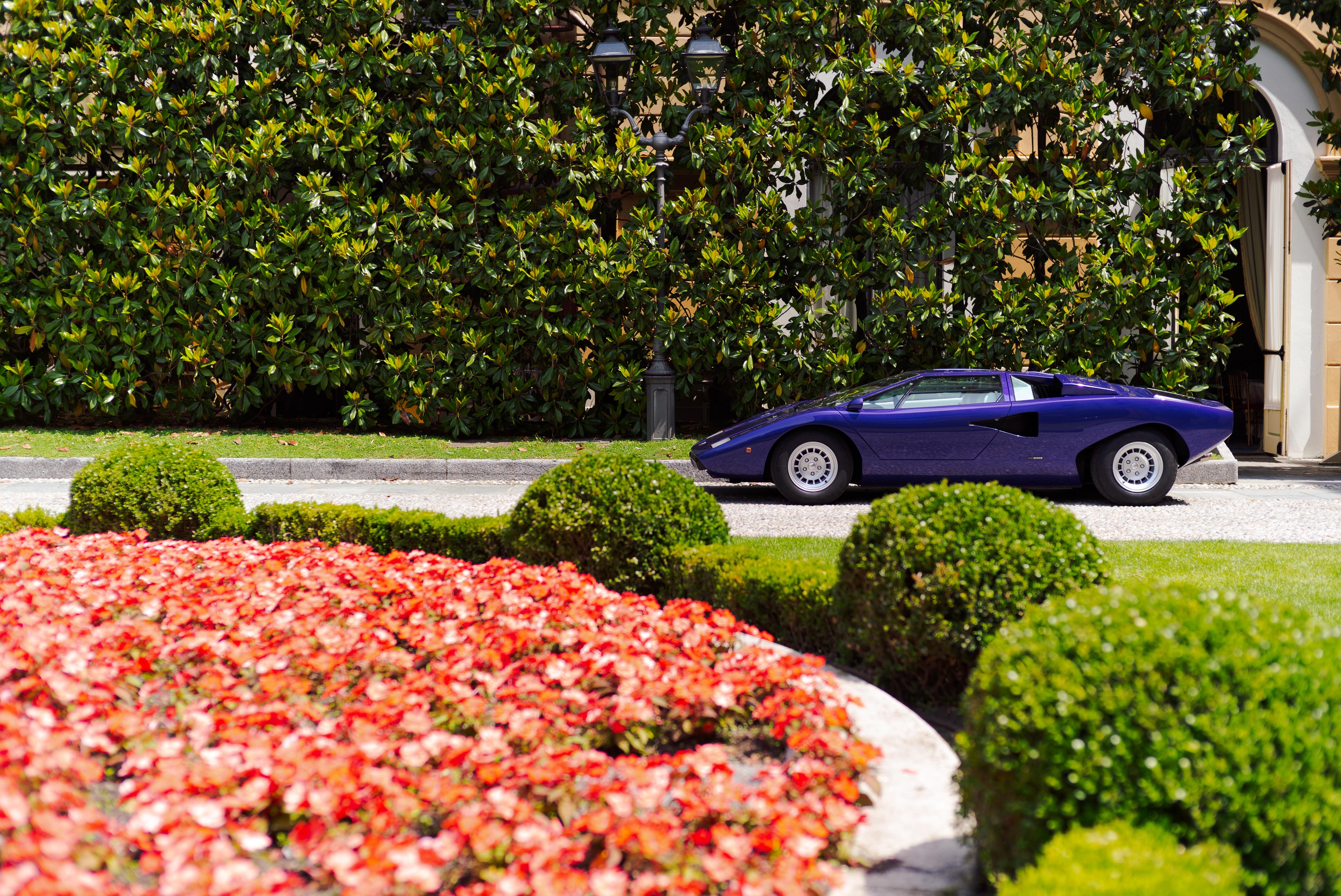
At Concorso d’Eleganza Villa d’Este, he found the clearest expression of this. It was not merely the cars on the lawn at Lake Como. It was the atmosphere. The people. The fact that even in pouring rain, everyone still looked chic and pleased to be there.
“To me, Concorso is the greatest art show spectacle of cars in the world,” he says.
But what moved him even more happened on the roadtrip on the way there. One year, driving down from Germany and staying at a small Austrian lodge, he met a man in his early seventies who was also headed to Lake Como. This man, allegedly, did not “do car shows.” He was simply driving there with a friend as the story went.
However, the car was a Ferrari F40. For those who might be uninitiated, the F40 is considered to be one the reference models from Ferrari. It was commissioned for the company’s 40th anniversary with the heavy involvement of Enzo Ferrari himself.
Down in the Austrian hotel’s parking garage, there it was. The owner was proud of putting miles on it. He wanted it to be the highest-mileage F40 in the world. This is a car usually sealed away in someone’s climate controlled garage.
“There was nothing shouty,” Maness says. “The cars were literally transportation for a nice road trip with their wives. As they should be.”
This feels like Maness’s dividing line. A car as an experience, yes. A car as an asset class, less so.
He is not naive about what has happened to the collector market. Cars have become speculative objects, stores of value, ways of moving money, things bought and held rather than driven and loved. That may be rational. It may even be inevitable. But it does not do much for the culture.
It also makes entry harder for the next generation.


Where is a young enthusiast supposed to look when manual transmissions are disappearing, new cars are increasingly digital, and the analog stuff has been financialized into oblivion?
This leads us to the “old” car.
Maness is not one of those people who claims all old cars are better. In fact, he happily says a modern Prius is objectively a better functioning ‘product’ than a 1969 Boss 429 Mustang. Better, though, does not always mean more enjoyable. Or more memorable.
“I don’t have any great memories of a Prius,” he says.
The emotional charge of older cars, to him, has less to do with objective superiority than transportation in another sense.
“They are the closest thing we have to a time machine,” he says. (Hear, hear!)
Vintage clothes can suggest another era. A vintage watch can carry one on the wrist. But an old car changes the air around you. With the right road, the right music, the right light, it can do something more complete. This is why he thinks Goodwood Revival may be the greatest automotive event in the world (a three-day event held in the UK featuring vehicles roughly from the mid-40’s–mid-60’s period), though he is careful to add that he still needs to go before confirming it. The appeal is not perfection. It is immersion.
His feelings on restomods, then, are not purist. If a car has genuine racing history or serious rarity, preserve it. Otherwise, Maness is happy to see owners interpret, improve, modify, and use the thing. Older cars often looked great and drove terribly. Maness is right again here. Making them safer, stronger and more usable can be a noble pursuit.
What bothers him doesn’t seem to be modernization, rather it’s laziness dressed up as craftsmanship. The quarter-million-dollar 4x4 with little more than an engine swap, wheel-and-tire package, and upholstery job does not impress him. Tasteful work does. Half-assery does not.
His own garage is tellingly broad: a 2017 Porsche Cayenne Turbo, a 2019 Mercedes-Benz S560, a 2019 Range Rover HSE TD6, a 1968 Ford F100, and a few motorcycles. His first car was a 1991 Subaru Legacy Turbo. His worst was another Legacy, a 1993 wagon with holes in the floor. His best, he says, was a 2008 Porsche Boxster RS60 Spyder.
Not a collection built for a single social signal, but a set of tools for different applications.
If old cars satisfy the analog craving, motorcycles do it even more directly. Apart from riding a horse, Maness says, there may be nothing more visceral. “When you have the sickness,” he says, “there really is nothing like it.”
Still, he is not anti-modern. This is where his view becomes more interesting than the usual analog sermon. Modern cars are safer, faster, more comfortable and more capable. They are also, often, less tactile. Screens dominate. Interfaces bury basic functions. The car begins to feel less like an object and more like a tablet on wheels.
Maness sees screen fatigue working its way into car culture. Younger people, raised inside screens, are increasingly drawn to amber gauges, green displays, blue-and-red Volkswagen instrument lighting, physical buttons and knobs. Things you touch. Things that offer a backlit glow rather than screen glare.
His own definition of “peak car” lands roughly between 2006 and 2018. The period when early digital technology had arrived, but had not yet consumed the interior.
“Screens weren’t dominating the center stack,” he says, “and they certainly weren’t replacing gauge clusters.”
Surprisingly, this does not imply he is anti-EV.
A perfect garage, he says, probably includes an electric runabout. If Ford gets it right, something like an electric Maverick. He likes EVs for what they do well: quiet, local, civilized transportation. He loved driving cars like the Mercedes G 580, Rolls-Royce Spectre and BMW i7 in Los Angeles.
“It doesn’t need to be absolute,” he says. “People like to deal in absolutes. The media loves to deal in absolutes.”
He is wary of the idea that because something exists, everyone must get on board. EVs, autonomous driving, massive touchscreens, subscription features: all of it can feel less like consumer desire and more like consensus hallucination.
Cars, in this way, become a visible expression of a much larger cultural flattening.
Maness has written and worked in worlds that touch watches, menswear, hotels, spirits, interiors and cars. What connects those things when they are done well? “They elicit a real emotional response that goes beyond a dopamine hit,” he says. “I’m looking for depth of character in all things.”
Depth of character is a big phrase. It is what separates taste from reference acquisition. Anyone can absorb the ‘correct’ signals now. The algorithm will happily show you the ‘right’ loafers, the ‘right’ vintage chinos, the ‘right’ hotel bar, the ‘right’ chronograph, the ‘right’ air-cooled Porsche, the ‘right’ Danish chair. But exposure is not the same as understanding. Far from it.
How does he know whether someone has developed actual taste rather than simply absorbed specific references? He looks for things that feel lived in. Books help, too.
“A person who reads widely and voraciously usually has pretty good taste,” he says.
Offline communities, he thinks, can still protect taste. Online, those same communities can often turn it into a hollow symbol. The thing becomes the uniform. The reference becomes the performance. The point gets lost.
This is also why Los Angeles is significant.
LA can be car hell: traffic, gas prices, distance, irritation. It can also be car heaven: weather, roads, culture, canyon mornings, night drives, strange overlaps, and endless subcultures if you know where to look.
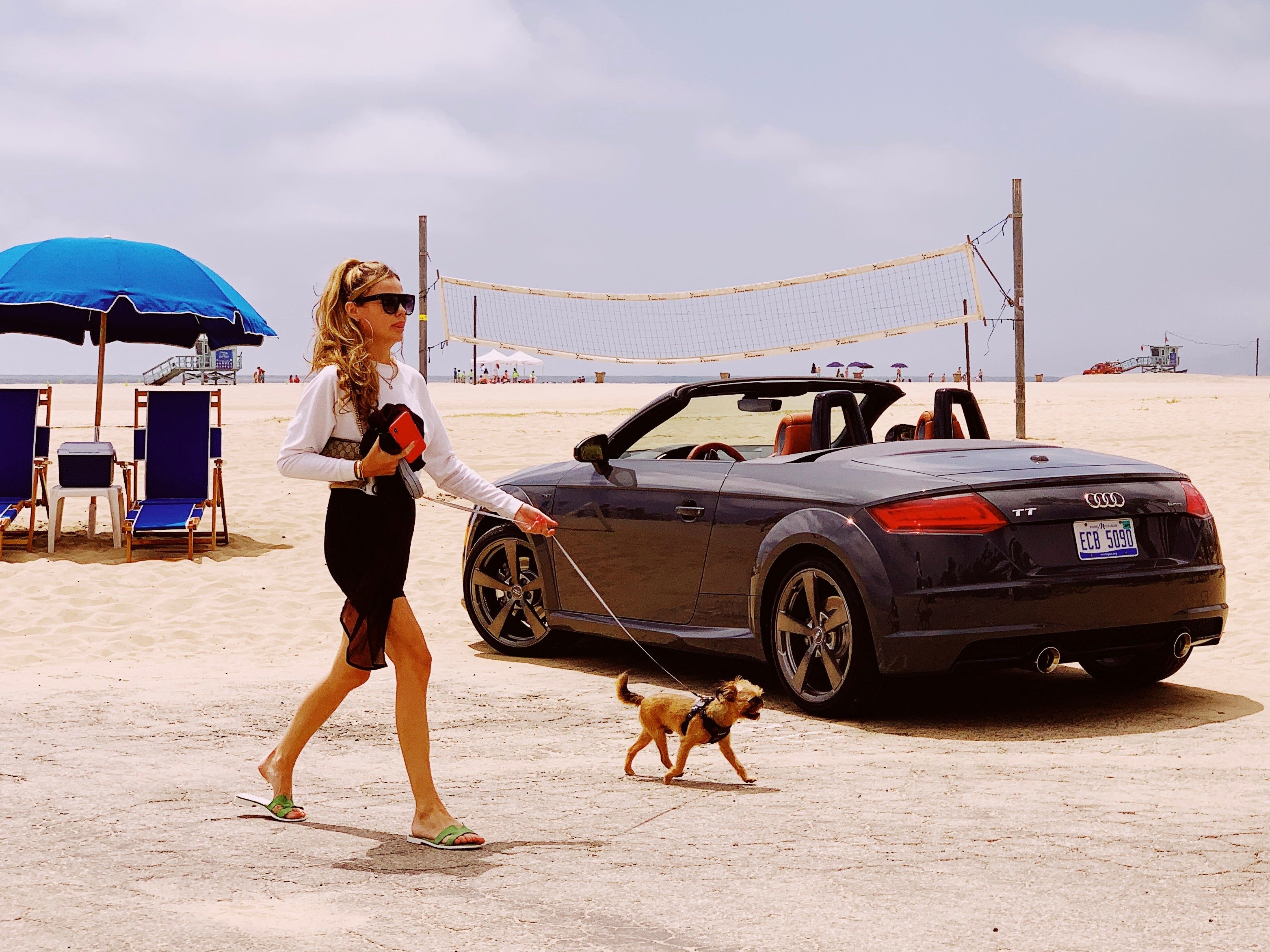
Someone once told Maness that LA was like a cultural buffet: “Nobody is going to serve you,” the person said. “You have to walk up and put what you want on your plate.”
That, Maness says, is true of LA car culture. The good stuff exists, but you have to seek it out.
A favorite driving day might mean leaving before dawn for the canyons or mountains around Los Angeles and watching the fog burn off. But he gives a romantic answer, too.
“Top down under a sky full of stars can’t be topped,” he says. “Sun up, top up. Convertibles are for night driving.”
By the end of our conversation, the word “motoring” has been effectively redefined. It is not performance driving. Not necessarily speed. Not even necessarily the car itself.
Motoring, for Maness, is the whole of the immersive experiences: a road, a town, coffee, maybe a hotel, maybe a body of water, maybe friends and family. It could be Maine. It could be the Carolinas. Probably somewhere along the eastern seaboard, close to the Atlantic.
“You’re in it just for the drive,” he says. “Maybe there are some new roads or detours along the way, but most of it is based on whatever little towns, where you want to eat. Where are we getting coffee? Is there a cool hotel to stay at? That’s motoring to me.”
I think this is the best answer he gives, because it makes the rest of the conversation make sense.


The cars are important. Of course they are. The Ferrari. The Maverick. The GT3 RS (Maness’ vote for most overrated car). The Tuthill 911K screaming through Swiss mountain passes in Summer with the windows down (which would be his choice for perfect car + driving road combination). But the car is only an instrument. The real magic is your participation and how you experience all of it.
Our conversation is a great reminder to put miles on the cars. And put miles on yourself, too.
 | A guest post by
|
Inspiring to read about your intersecting passion for cars and print journalism. I just ordered a copy of the Motoring Journal!
Most excellent!